
Car Crash Simulator: Mountain review
 Analysis by GetAllApps
When a phone or tablet gets passed around at home, a racing game needs to be easy to understand and fun to pick up without turning into a big commitment. Car Crash Simulator: Mountain takes a clear, high-impact approach: it’s a driving game built around steep mountain roads and soft-body car crashes. That focus makes it easy to explain to another player—and sets expectations before anyone starts driving.
Mountain driving that invites a quick handoff
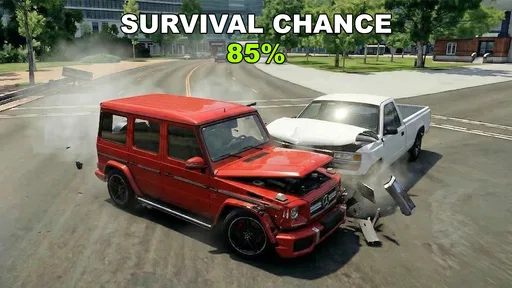
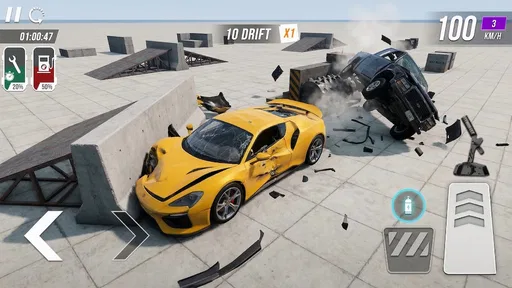
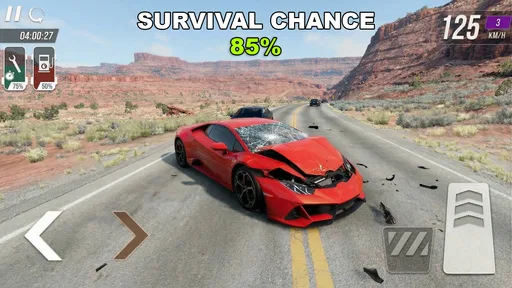
The central appeal is right there in the premise: take on challenging slopes, handle a car, and see what happens when a crash sends it into the scenery. Rather than presenting itself as a conventional race focused on polished competition, the game leans into hardcore driving simulation and physical-looking collision action. If your household enjoys watching a run unfold as much as trying to master it, that combination gives the game an immediate talking point.
I can see it working well as a shared-device pick because the idea is easy to pass along. One person can make a run, hand over the phone, and let the next player try their own approach. There’s no need to explain a complicated story to make the premise appealing: mountain roads and dramatic crashes do the work. That simplicity is useful when players have different tastes or attention spans, though anyone expecting a broad collection of racing modes should keep the game’s focused concept in mind.
Its name, Car Crash Simulator: Mountain, also spells out the experience plainly. The emphasis is not simply on getting from one place to another; the appeal is in controlling a vehicle on steep terrain and seeing how it responds when things go wrong. For players who like experimenting with driving and collisions, that’s a more distinctive hook than a generic promise of speed.
A focused take on racing
The game sits in the racing space, but its store description points toward a simulator-style experience rather than a traditional head-to-head racer. That distinction matters in a home where one person wants close competition and another just wants to explore a challenging road. Here, the mountain setting and crash physics are the main draw, so I’d approach it as a driving sandbox with a strong collision theme rather than assume it offers a full racing-campaign structure.
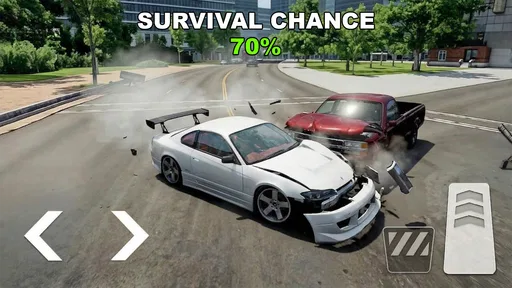
The phrase “soft-body car crashes” suggests that impacts are meant to feel more involved than a simple stop or reset. That can make a misjudged turn entertaining instead of merely frustrating: the crash itself is part of the spectacle. It also gives players a reason to compare what happened on different attempts. The fun is likely to come from seeing how a run develops, not only from reaching a finish line.
Because the premise is so concentrated, expectations are important. Someone who likes mountain driving, vehicle handling, and crash-focused play may find the concept appealing straight away. A player looking for a realistic motorsport career, a large roster of race types, or deep competition should first make sure that this particular style sounds enjoyable. The game’s identity is its steep roads and car crashes, and that is where I’d place my expectations.
Setting expectations on a shared device
Shared-device play is convenient, but it can blur the line between one person’s session and another’s. Before handing over a phone, I’d agree on a simple household routine: who is using it, when it should be passed back, and whether anyone should avoid changing settings or making purchases. These are sensible ground rules for any game on a shared device; they should not be mistaken for features built into this one.
The game is free to download and includes in-app purchases priced at $2.49 per item. That makes a quick conversation about spending worthwhile, particularly if children use the same device as adults. Agreeing that purchases need permission—or keeping payment decisions with the device owner—can prevent an enthusiastic session from becoming an awkward surprise. The game is rated Everyone, but that age label doesn’t remove the value of clear household boundaries around spending and screen time.
Account boundaries deserve similar care. If multiple people use the same device or store account, make sure everyone understands whose account is active and who is allowed to approve purchases. I wouldn’t assume that the game separates household members or provides family-management options; the practical approach is to handle those expectations through the device and the people using it.
Taking turns without making it a contest
A crash-heavy driving game can naturally spark friendly challenges: who can keep control on a steep stretch, who can make the most interesting recovery, or who can produce the most memorable mishap. Those informal goals can make a shared session lively without needing to turn it into a serious competition. I’d keep the focus on experimentation and funny outcomes, especially when players have different levels of experience.
Coordination helps when the device belongs to someone else or is needed for other tasks. A quick turn-taking agreement is often enough: finish the current attempt, pass the device, and avoid changing anything the next player depends on. It’s a small detail, but shared games are more enjoyable when nobody has to guess whether a session is still in progress or whether the device is free.
The game’s concept also gives people something to discuss between turns. Was the road manageable? Did a crash happen because of a risky move or an unexpected loss of control? That kind of back-and-forth can be part of the entertainment, even for someone who isn’t holding the phone. Still, players should be comfortable with the crash-focused premise; it is a central part of the game, not a minor side element.
Age, trust, and sensible expectations
Car Crash Simulator: Mountain has an Everyone age rating, which makes it broadly accessible by store classification. For parents and caregivers, the more useful question is whether the driving-and-crash theme suits the particular child and how the device is managed at home. A rating is a helpful starting point, not a substitute for knowing what a young player enjoys or for checking in during shared use.
I’d also distinguish between age suitability and purchase permission. The game is free to start, but optional in-app purchases are available. A child can understand the driving premise and still need an adult’s guidance about spending. Setting expectations in advance—such as asking before any purchase—is clearer than trying to resolve a misunderstanding after the fact.
The game was released on November 29, 2024, and its current version is 3.0.45t. It is developed by Moon Star Games Yazilim, has more than one million installs, and holds an average rating of 3.5 from around four thousand ratings, alongside 176 written reviews. Those figures offer a broad snapshot of its reach and reception, but personal preference remains important: a crash-focused mountain driving game will naturally appeal more to some players than others.
For device compatibility, the listed minimum operating-system requirement is version 10. It’s worth checking the app store on the device you plan to use before installing, particularly if the phone or tablet is older. That simple step helps avoid confusion when a game is being set up for several people in the household.
What the household should expect
As a family or shared-device choice, the strongest argument for the game is that its premise is immediately understandable. Mountain roads create a clear driving challenge, while soft-body collisions add spectacle when a run goes off course. That can make it easy for different people to take turns and compare experiences without needing to share the same long-term goals.
The trade-off is that the game’s identity is quite specific. It is built around hardcore driving, steep terrain, and crashes, so it may not be the best fit for a household seeking a broad, conventional racing package. Nor should anyone treat the Everyone rating as a reason to skip conversations about in-app spending, device access, or how long each person gets to play. A little coordination makes the shared experience smoother.
Its reception is mixed rather than universally glowing, so I’d treat the concept as the main reason to try it, not assume that every player will love it. The free entry point lets interested players see whether the driving-and-crash formula suits them, while the optional purchases make clear spending rules a smart part of setup. Keeping those expectations grounded is especially useful when several people use the same account or device.
A practical household verdict
Overall, Car Crash Simulator: Mountain is an easy game to introduce to a shared device if the household enjoys challenging roads and crash-focused driving. Its strongest appeal is its simple, memorable combination of steep mountain routes and soft-body car impacts. I’d recommend it to players who want to experiment with driving and enjoy the spectacle when a run goes wrong, rather than to anyone expecting a conventional racing career.
For household use, agree on turns, keep account and purchase permissions clear, and make sure the game’s theme suits the people who will play it. With those basics settled, it can be a casual pick-up-and-pass-around option: one person takes the wheel, the next gives the road a try, and everyone can enjoy the unpredictable results. It’s a focused racing game with a clear hook, best approached with realistic expectations and straightforward shared-device rules.
Pros and cons
Pros
- Mountain roads create a challenging driving environment.
- Crash damage makes collisions visually satisfying.
- Simple controls are easy to learn.
- Short sessions suit casual play.
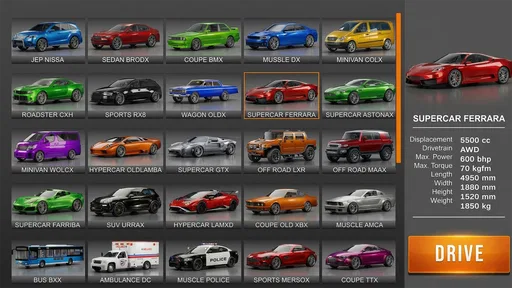
- Different vehicles add variety to each run.
Cons
- Repeated crashes can make objectives feel predictable.
- Vehicle handling may feel loose on steep roads.
- The mountain scenery can become repetitive.
- Ads may interrupt play depending on the version.
- Some vehicles or features may require in-app purchases.


